
Managing and delivering content efficiently in the digital era is crucial for businesses seeking to maintain a strong online branding image. This is where Content Management Systems (CMS) come into play, providing a user-friendly platform to create, edit, organize, and publish digital content.
A CMS simplifies the process of website management, allowing users with varying technical abilities to maintain and update their online content seamlessly. Understanding the key features of a CMS and knowing how to choose the right one can help businesses optimize their content management processes and enhance their online visibility.
What is a Content Management System (CMS)?
A Content Management System is a software application that enables users to create, manage, and modify digital content without requiring extensive coding knowledge.
CMS platforms typically offer a user-friendly interface, allowing users to add and format text, incorporate multimedia elements, and manage website structure and design.
CMSs are widely used for various types of websites, including blogs, e-commerce platforms, corporate websites, and news portals, to streamline content management processes and facilitate seamless website updates.
Key Factors to Consider When Choosing a CMS
Selecting the right CMS for your business involves evaluating various factors to ensure that the chosen platform aligns with your specific requirements and long-term objectives. Here are some essential considerations to keep in mind when choosing a CMS:1. Scalability and Flexibility
When choosing a CMS, you should opt for the one that can accommodate your business’s growth and evolving content management needs so as to ensure that the CMS offers scalability and flexibility to handle an increasing volume of content and can adapt to future technological advancements. For example, if your product amount is going to increase on a regular basis, you may need a CMS that is scalable and flexible enough to expand your product catalog and related content without any problem. By switching to a CMS that offers scalability and flexibility, you can seamlessly handle your expanding product range and accommodate the influx of customers without sacrificing website performance. The CMS allows you to easily grow your business, adapt to future changes, and integrate new features or technologies, ensuring that your online presence remains dynamic and competitive.2. Ease of Use and User Interface
When you are choosing a CMS, choose one with an intuitive, user-friendly interface that simplifies content creation and management tasks. The CMS should be easy to use and easy for the content manager to learn. A user-friendly CMS minimizes the learning curve for your team, allowing them to focus more on producing high-quality content and less on technical complexities.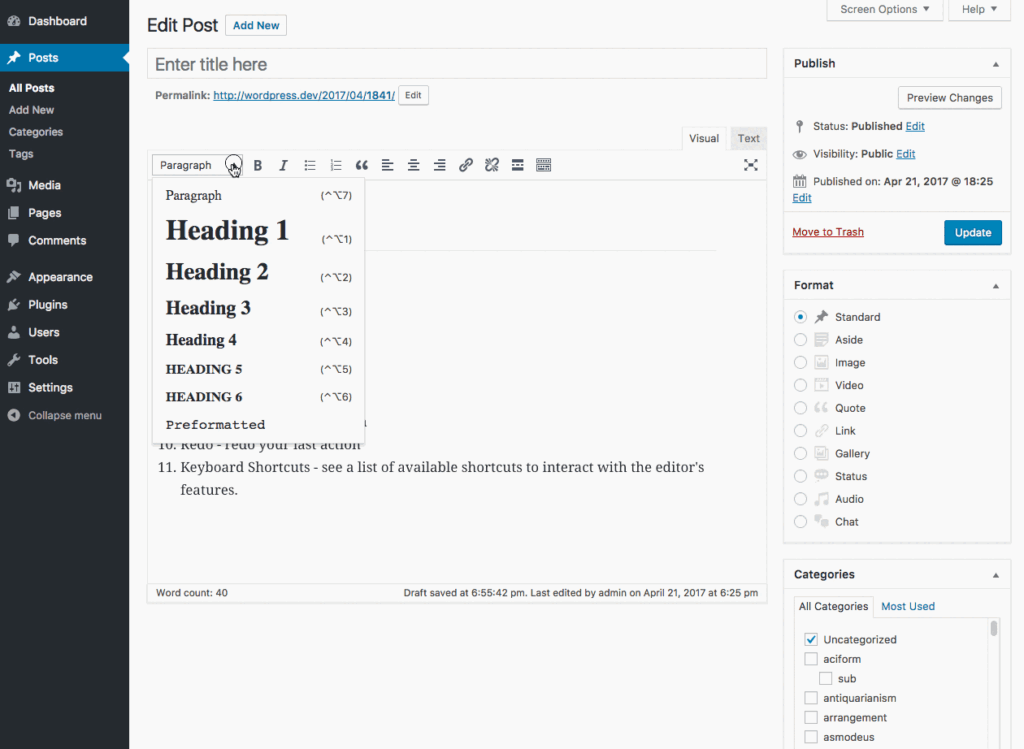
In this case, many CMS provide a What-You-See-Is-What-You-Get function (WYSIWYG) for users to alter their website easily. WYSIWYG means that users can directly edit webpage elements on the layout, such as a drag and drop panel, text editor or image editor. Since the editing process requires less coding skills, it allows companies to spend less resources on training their employees.
Read more: Why do you need a professional website developing vendor?
3. Customization and Integration Capabilities
Select a CMS that provides extensive customization options and seamless integration with third-party tools and applications. Customization features enable you to tailor the website’s design and functionality to reflect your brand’s unique identity and meet specific business requirements.This integration streamlines your marketing operations, empowering your team to make data-driven decisions, optimize strategies, and deliver tailored content that resonates with your audience’s preferences, fostering stronger client relationships and driving business growth.
4. SEO-Friendliness
Choose a CMS that supports effective Search Engine Optimization (SEO) practices, facilitating the optimization of your website’s content for higher search engine rankings. Look for built-in SEO tools and features that enable you to optimize metadata, URLs, and other essential elements to improve your website’s visibility and online presence. If there are not any SEO tools, it will be difficult to evaluate the SEO performance of the website. The SEO tools can help you analyze your SEO performance including the use and selection of keywords, metadata length, and preview. Therefore, to help your website to gain exposure, it is important to choose a SEO-friendly SEO.